
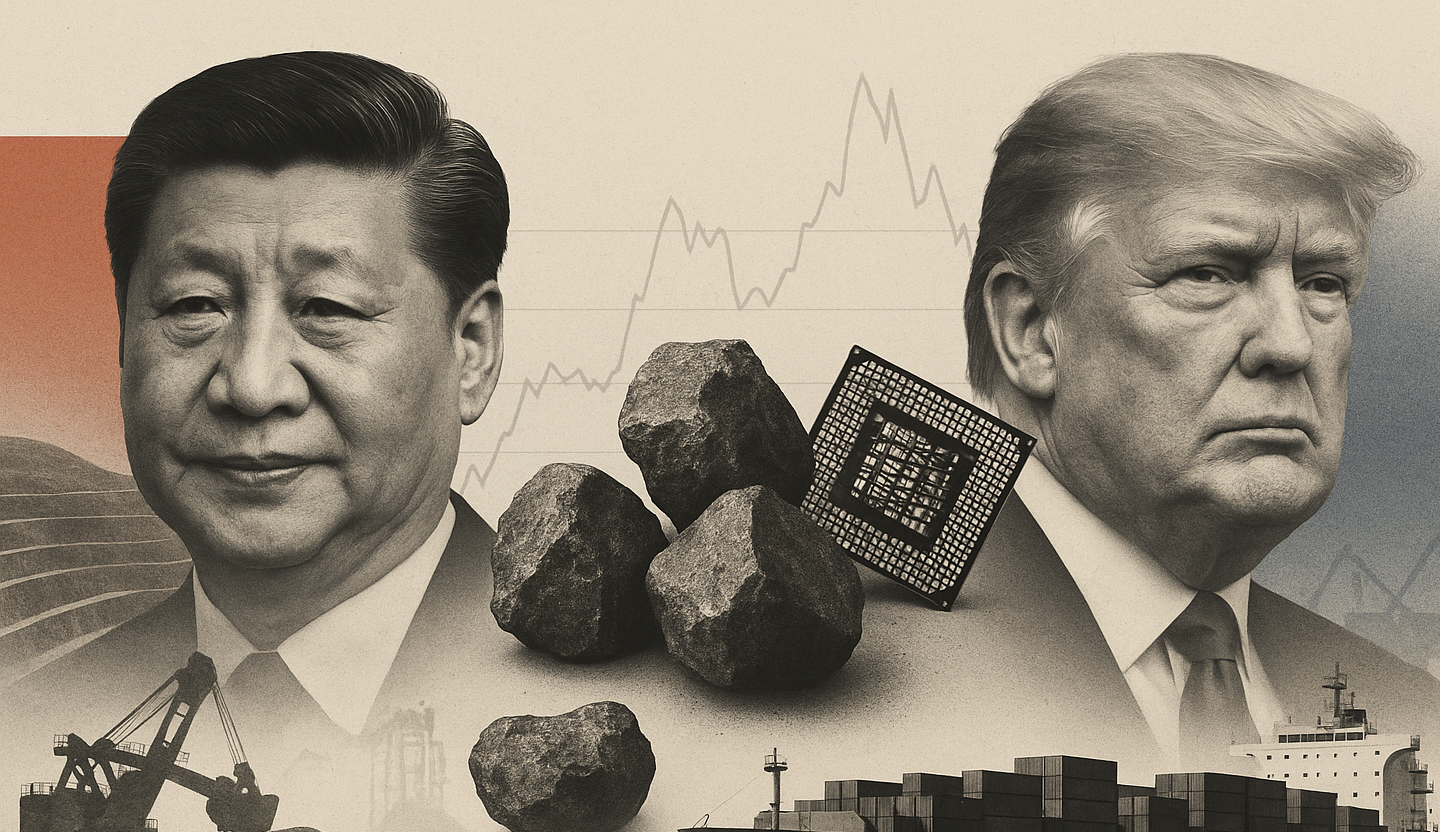

As tensions with China intensify, rare earth metals have moved from niche commodities to strategic priorities. Following Washington’s investments in MP Materials (MP) and growing talk of critical-minerals independence, analysts are now spotlighting a fresh group of U.S.-linked companies that could attract future government support—though none have official deals yet.
A recent MarketWatch report, citing William Blair analyst Neal Dingmann, outlines several firms positioned to benefit if the administration expands its industrial-policy push into rare earths and allied materials. These names sit at different stages of production and technology readiness but share one trait: they operate within the U.S. or allied supply chain that policymakers want to rebuild.
🇺🇸 Companies Analysts Are Watching
• United States Antimony Corp. (UAMY)
Produces a critical metal used in semiconductors, batteries, and defense munitions. The U.S. currently imports nearly all of its antimony, and UAMY’s domestic capacity could make it a target for Defense Production Act support or stockpile contracts.
• American Resources Corp. (AREC)
Working on rare-earth separation and magnet recycling from coal byproducts. If its purification technology scales as advertised, AREC could become a lower-cost recycler for EV and drone components—fitting squarely within the reshoring narrative.
• USA Rare Earth Inc. (USAR)
Cited by analysts as a potential candidate for future U.S. engagement but no government funding or partnership is confirmed. Its Round Top, Texas project aims to supply a full rare-earth-to-magnet value chain domestically. The company’s progress will depend on securing financing and permits before any federal involvement becomes likely.
• NioCorp Developments Ltd. (NB)
Advancing a Nebraska deposit rich in niobium, scandium, and titanium, materials critical for aerospace alloys and clean-energy tech. NioCorp has applied for Pentagon and Energy-Department grants but remains in the proposal stage.
⚙️ Policy Context
The new U.S.–Australia critical-minerals agreement unlocked $8.5 billion in project financing, part of a broader strategy to counter China’s dominance in refining. Beijing’s recent export restrictions on gallium and germanium—alongside talk of tighter rare-earth controls—have only strengthened Washington’s resolve. Analysts expect a second wave of domestic funding announcements in the months ahead.
⚠️ Investor Caveats
- None of the companies above have confirmed U.S. contracts or equity injections.
- Many remain pre-revenue and require significant capital to reach production.
- Valuations have already reacted to speculative interest, making them sensitive to policy headlines.
- Execution risk—permits, cost inflation, and technology validation—remains high.
🎯 The Signal
Rare-earths are fast becoming the new battleground of industrial policy. Whether through direct investment, tax incentives, or defense procurement, the U.S. appears committed to securing its supply chain.
For investors, the opportunity sits in anticipating which firms can translate policy attention into tangible output. Until funding announcements arrive, these stocks are position trades on narrative momentum, not yet confirmed beneficiaries.
Sources: MarketWatch, Barron’s, William Blair Research, Company Disclosures.
Disclaimer: Some companies are cited by analysts as potential candidates for government support; no U.S. commitment exists unless formally announced.